Commercial pad gas service across parking
Restaurant feed across lot — operator template may require cased bore with documented locates.
Hobbs, NM · Lea County
Gas line directional boring in Hobbs with operator locate discipline — PE and casing under US-62 frontage when open cut conflicts with gathering-line templates.
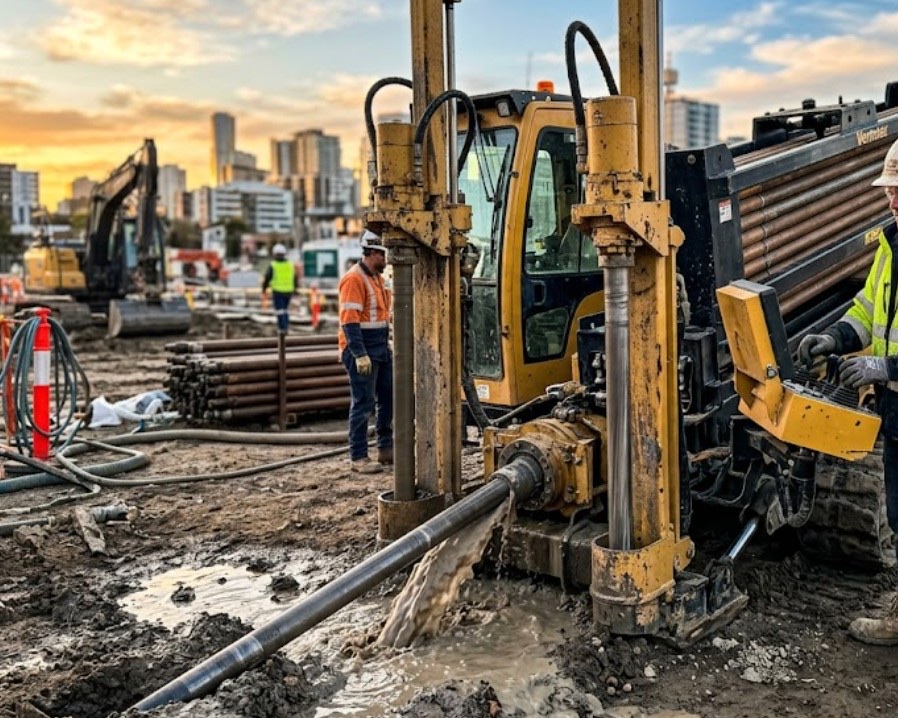
Gas line boring in Hobbs follows operator procedures and New Mexico ROW rules — safety and locate quality drive the schedule in oil-country where gathering density is high. Authorized work installs PE and steel casing with fusion, testing, and documentation before energization.
Shallow gas along Permian streets sits near water, electric, and oilfield service lines — enhanced locate and standoff are mandatory. Homeowner service extensions usually flow through the serving operator or assigned contractor.
US-62 and Broadway industrial corridor work may combine casing and PE on crossings — caliche hardpan influences tooling. Operator fees and inspection are scoped in quotes.
Real Lea County angles — not generic statewide copy.
Restaurant feed across lot — operator template may require cased bore with documented locates.
Industrial alignment with operator easement — engineered profile and sign-off first.
Operator-assigned scope — bore under street to meter with fusion and pressure test.
Operator agreement adds inspection to 811 — casing before PE per template.
Hobbs gas bores start with operator approval and locates — no work on incomplete marks. Casing may precede PE on crossings; fusion and documentation close the loop. Caliche triggers tooling review before forcing the bore.
Lea County Delaware Basin fringe carries caliche hardpan, sandy desert fill, and oilfield grading debris — shallow clay lenses and produced-water corridor proximity change mud programs pad to pad.
Hobbs bores encounter caliche hardpan between 2 and 10 feet on flat desert parcels — common across the Permian fringe. Sandy fill with oilfield grading cobbles and debris lenses stalls reaming without test pits on industrial-adjacent paths. Shallow clay can hold moisture after monsoon storms — buoyancy management matters on longer HDPE pulls through soft topsoil. We do not assume agricultural irrigation models from Clovis apply on oilfield-dominated Lea County pads.
Permian Basin heat, spring wind, and summer monsoons drive Hobbs bore schedules — dust storms and oilfield pad runoff on flat desert fill are built into quotes.
Summer heat above 100°F affects crew safety and fluid performance on exposed industrial pads from May through September. Monsoon cloudbursts soften desert ROW from July through August — entry pit work may wait for dry windows. Spring wind complicates cage handling on open US-62 sites. We schedule around known patterns instead of forcing bores into saturated fill after flash runoff from oilfield pads.
City of Hobbs Community Development, Lea County ROW, NMDOT District 2 on US-62 and US-180, oil-and-gas operator easements, and Xcel Energy agreements apply on many alignments.
City of Hobbs Community Development governs street cuts, driveway removals, and drainage work along municipal ROW. Lea County rules apply on unincorporated parcels toward Lovington and oilfield lease roads. NMDOT District 2 controls US-62, US-180, and state highway bores — MOT plans are common on Broadway frontage. Oil-and-gas operator easements and gathering-line agreements add hold points beyond standard 811 on industrial corridors. Xcel Energy agreements govern electric-adjacent paths in eastern New Mexico.
Gathering easements, paved ROW, and industrial pads often mandate trenchless gas work. Strike prevention drives the method choice in oil-country.
Operator fees, inspection, casing, soil, traffic control, testing, and emergency planning.
You share plans or describe the problem; we confirm alignment, depth, access, and which trenchless method fits New Mexico soils.
New Mexico 811 ticket filed; two business days minimum before pits open unless your permit path differs. We pothole where marks conflict.
Bore plan, NMDOT or city ROW permits, railroad agreements, and crossing engineering when the path leaves private property.
Compact spread for tight Santa Fe lots; larger HDD for I-25 or I-40 relocations — matched to length and diameter.
Steered pilot on design line, ream passes sized for your pipe or casing, fluid program tuned for caliche or adobe clay.
HDPE fusion, steel casing, or multi-duct bundle pulled with tension and bend-radius monitoring.
Pressure test, mandrel, or survey records for owners, inspectors, and operators as spec requires.
Compact pits, replace gravel or hardscape per scope, leave 811 ticket and locate map in your project file.
Usually through the serving utility or assigned contractor — call with utility contact info.
We work to operator specs; prequalification may be required on Permian bids — ask early.
Enhanced locate and pothole at conflicts — expired tickets stop work.
Tooling, mud, or alignment revision evaluated with engineer and operator first.
24/7 — Emergency dispatch statewide. Tell us entry, exit, pipe size, and county — a bore specialist calls back with cost drivers, not a flat rate.
Scope your alignment
Step 1 of 2 — path, pipe, and city first