
Trunk sewer under Downtown mixed-use fill
Deep gravity sewer with tight elevation tolerance — shaft footprints replace a continuous trench that would conflict with shallow PNM and fiber.
Albuquerque, NM · Bernalillo County
Microtunneling and pipe jacking for Albuquerque municipal trunk sewers — sealed-face mining when HDD diameter or grade tolerance cannot meet city gravity specs.
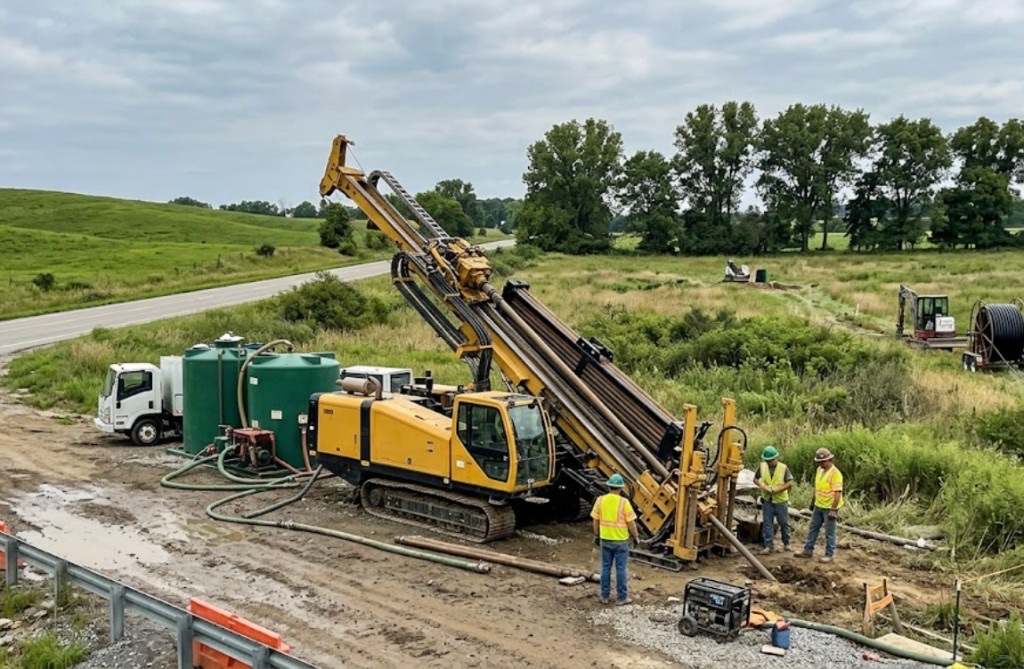
Tunneling and TBM work in Albuquerque targets municipal trunk sewers, large storm outfalls, and owner specs where steerable HDD cannot hold gravity grade or diameter. Shaft spreads localize disruption compared to open trenching a deep urban trunk through utility-congested fill near Downtown and the Rio Grande.
Rio Grande bosque and North Diversion Channel outfall projects often land here — high groundwater, floodplain review, and settlement limits push engineers toward pipe jacking instead of wide open cuts through trail systems and parkland.
Residential laterals and short commercial shots stay on HDD or auger bore. Microtunneling in Albuquerque is a municipal and large-contractor tool — we scope shafts, slurry handling, and city inspection milestones when your plans call for it.
Real Bernalillo County angles — not generic statewide copy.
Deep gravity sewer with tight elevation tolerance — shaft footprints replace a continuous trench that would conflict with shallow PNM and fiber.
Floodplain and bank stability rules favor mined crossings with engineered shafts instead of open cut through saturated alluvium.
RCP jacking on laser guidance with city mandrel inspection — settlement monitoring where adjacent rail spurs cannot tolerate surface heave.
NMDOT-adjacent storm trunk where lane closure math favors shaft-to-shaft mining over open cut across frontage roads.
Microtunneling in Albuquerque begins with shored entry and reception shafts — dewatered and surveyed to city hold points. A steering head mines the face while pipe segments jack behind; slurry or spoil handling matches bosque groundwater. Laser guidance keeps grade for gravity sewer; inspection milestones follow municipal contract documents.
Bernalillo County mixes caliche hardpan, adobe clay, and Rio Grande valley sand — foothill volcanic tuff appears on east-side shots toward the Sandias.
Most Albuquerque bores hit caliche crust between 2 and 8 feet, then adobe clay or Rio Grande sand depending on distance from the river. East toward the Sandias, volcanic tuff and fractured basalt slow penetration without the right bit and mud program. Westside infill on old farmland can hide cobbles and debris lenses that stall reaming if geotech is skipped. Shallow groundwater along the bosque raises buoyancy risk on long HDPE pulls — we size ream stages and pullback tension accordingly, not with a generic Permian basin template.
High-desert sun, spring winds, and July–September monsoons shape Albuquerque bore schedules — lightning holds and post-storm arroyo runoff are planned into quotes.
Monsoon season from July through September is Albuquerque's biggest calendar variable. Saturated adobe clay softens ROW and can delay entry pits; arroyo channels carry debris after cloudbursts. Spring winds affect cage and fluid handling on exposed Westside pads. Winter cold snaps at 5,300 feet elevation slow morning startup but rarely stop work — we communicate when dry conditions matter for caliche-heavy pits rather than risk a frac-out toward the bosque.
City of Albuquerque Planning & Development, Bernalillo County ROW, NMDOT District 3, Rio Grande floodplain, and BNSF rail agreements apply on many alignments.
Inside Albuquerque city limits, street cuts, driveway removals, and bosque-adjacent work may need Planning & Development permits. Bernalillo County ROW rules apply on unincorporated pockets toward the airport and South Valley. NMDOT District 3 controls I-25, I-40, and Paseo del Norte state bores — expect traffic control plans and sometimes night-only windows. BNSF agreements govern rail-yard-adjacent crossings. Historic districts near Old Town and Downtown may add review on pit placement and surface restoration.
Open trenching a deep Albuquerque trunk through urban fill hits every shallow utility and storefront access issue. Shaft footprints concentrate impact. HDD rarely replaces microtunneling when diameter exceeds steerable tooling or grade tolerance is municipal-gravity strict.
Diameter, length, shaft depth, groundwater handling, disposal, guidance, and municipal inspection milestones.
You share plans or describe the problem; we confirm alignment, depth, access, and which trenchless method fits New Mexico soils.
New Mexico 811 ticket filed; two business days minimum before pits open unless your permit path differs. We pothole where marks conflict.
Bore plan, NMDOT or city ROW permits, railroad agreements, and crossing engineering when the path leaves private property.
Compact spread for tight Santa Fe lots; larger HDD for I-25 or I-40 relocations — matched to length and diameter.
Steered pilot on design line, ream passes sized for your pipe or casing, fluid program tuned for caliche or adobe clay.
HDPE fusion, steel casing, or multi-duct bundle pulled with tension and bend-radius monitoring.
Pressure test, mandrel, or survey records for owners, inspectors, and operators as spec requires.
Compact pits, replace gravel or hardscape per scope, leave 811 ticket and locate map in your project file.
Large-diameter gravity sewer, tight grade tolerance, or owner specs requiring sealed-face mining. Your engineer's method note drives the answer — we do not swap methods without plan approval.
Shafts are smaller than a full trunk trench but still need traffic control and restoration. Trenchless here means localized shafts, not zero surface work.
We coordinate with your engineer for shaft, mining, and reception hold points defined in the contract — city inspectors witness per municipal detail.
Rarely economical — short laterals and driveway shots use HDD. Trunk and interceptor scale justifies shaft spreads.
24/7 — Emergency dispatch statewide. Tell us entry, exit, pipe size, and county — a bore specialist calls back with cost drivers, not a flat rate.
Scope your alignment
Step 1 of 2 — path, pipe, and city first